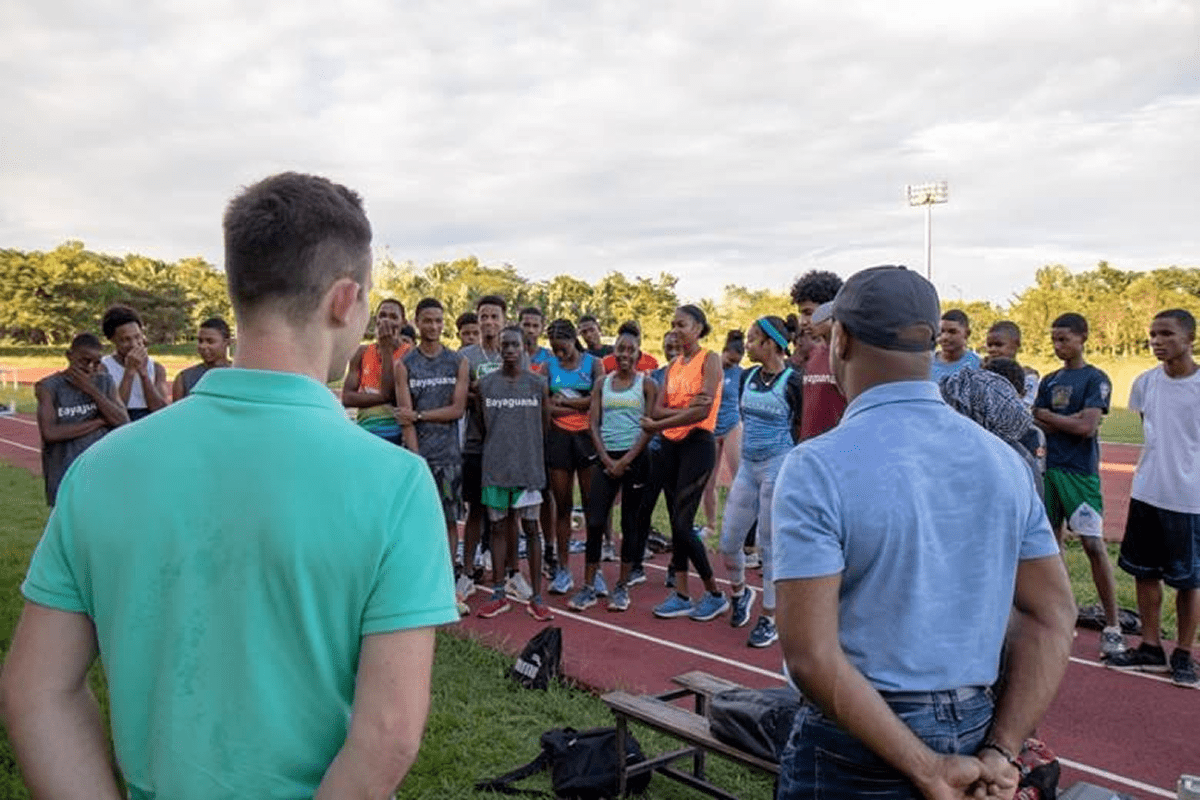
A 3-month landmark study of U18 Dominican adolescent Elite Track and Field athletes from the Dominican Republic’s public school system looked at performance and recovery aspects of their daily training after specialized diet modifications. It was carried out by researchers of both Western Michigan University, Kalamazoo, MI, and King’s College in London, with support from Union Deportiva de Bayaguana and authorities at the Ministry of Sports and Recreation as well as the Dominican Olympic Committee. From August 2023 to May 2024, researchers gathered nutritional information on school foods, athletes’ health markers, and set guiding parameters on the relationship between the school feeding program's diet and athletic performance.
Using a supplemental menu of 5 functional foods toolkit designed by the researchers to improve body mass index, explosive energy, vaso-dilation, and daily intake of macro- and micronutrients, they proceeded to determine how these factors impact corresponding biomarkers and 4 key performance indexes.
The study is the first in the Dominican Republic to leverage public school Track and Field athletes' diets, 5 Key Performance Indicators, and robust biomarker data to examine their relationship with athletic performance and recovery.
Research team recruited and analyzed data from 16 (8M/8F) adolescent elite Track and Field athletes from the municipality of Bayaguana, Monte Plata province, with a similar range of ages, socio-economic backgrounds, but diverse health conditions. The subjects were divided at random into two groups of 8 athletes. One (SD/standard diet) group maintained the standard school daytime diet (breakfast + lunch) plus dinner at home.
The second (MD/modified diet) group was provided during 3 months with 5 supplemental functional foods, designed to provide the users with levels of energy, macro and micronutrients requirements as recommended by Dr. Oliver Witard (UK’s Invited researcher and editor of World Athletics Nutritional Consensus 2020), O.C. Garthe and Phillips, S.M. in their paper entitled: “Protein consumption for adaptation to training and manipulation of body composition in track and field athletes”. International Journal of Sports Nutrition, 29 (2), 165-174.
All subjects are low-income students attending the public high school system, and throughout the intervention, both groups maintained their standard diet supplied by the school feeding program, which is set to provide 60-65% of the Recommended Daily Intake of macronutrients based on a 2,000-calorie-per-day diet.
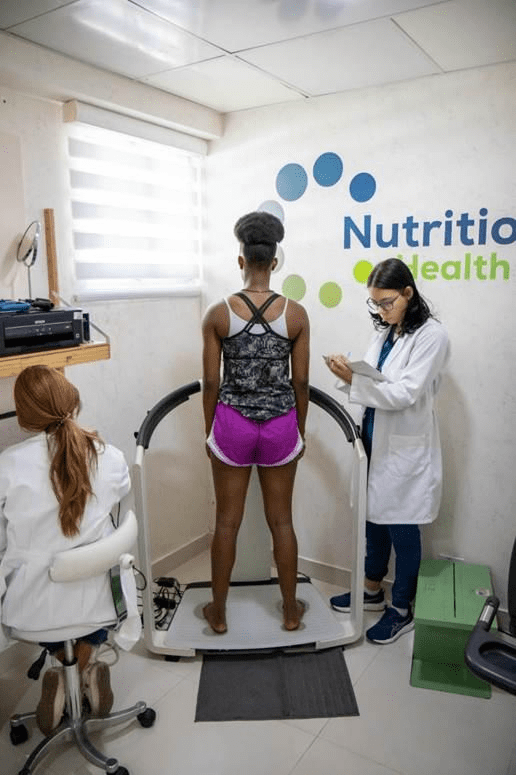
A baseline set of complete hemograms, electrolyte count, BMI, VO2max, gym protocols, and anthropometric evaluations, followed by performance key indexes and track and field tests for each one of both groups, was then carried out monthly during a period of 3 months.
Researchers noted that 65% of all athletes had very low initial hemoglobin (anemia) and ferritin (kidney’s iron reserves) levels, while the remaining 35% were below healthy levels. After 1 month of using the tool kit designed for the intervention group, all 8 athletes were at average and upper levels of hemoglobin and ferritin.
The study confirmed a strong association between spreading protein intake and supplementation during the day and an increase in white blood cells (platelets) count, too.
Interestingly, all subjects in the MD diet marked a simultaneous increase in Calcium and Iron absorption after the first month of supplementation. Iron and Calcium absorption are competitive organic processes, normally one occurring to the disadvantage of the other.
Out of 8 athletes in the modified diet group, 7 increased body weight after 30 days, averaging a 4-6% increase.
It was recorded that in 5 out of 8 athletes in the modified diet group, there was an increase in immunological response by % neutrophils measured.
Zinc is an essential mineral, critical for immunological function as well as a catalyst of protein synthesis and muscle mass recovery. Zinc levels jumped an average of 80-110% compared to baseline, after only 30 days of consuming the modified diet.
Vitamin B12, a metabolite critical to the generation and use of energy at the cellular level, as well as in DNA and cellular multiplication, in 6 out of 8 subjects, increased an average of 60-80% from baseline levels measured, after just 30 days of supplementation.
Explosive energy measured by the Margaria-Kalamen protocol showed in 6 out of 8 subjects in the MD diet, an increase of 11 – 44 % in output of explosive anaerobic alactic energy after 60 days of supplementation.
“….We found consistent evidence that consuming healthy foods and reaching macro and micronutrient daily intake of protein, healthy fats, critical micronutrients, and phytonutrients, is associated with increased metabolic markers, more speed and explosive energy output, according to the evidence gathered”.